Accidental
Optionality
Taking the Hypotenuse
and Other Fables
A book of crooked morals
— of shortcuts, old absurdities, and the accidents that quietly come into the money
Taking the Hypotenuse and Other Fables
The options that end up mattering in a life are almost never the ones you engineered. They are the ones you tripped over.
Careers are built like sidewalks: degree, then job; ladder, then rung. This book is about the people who cut across the grass — told by one of them, with the mud still on his shoes.
Accidental
Optionality
Taking the Hypotenuse
and Other Fables
The mild, load-bearing heresy
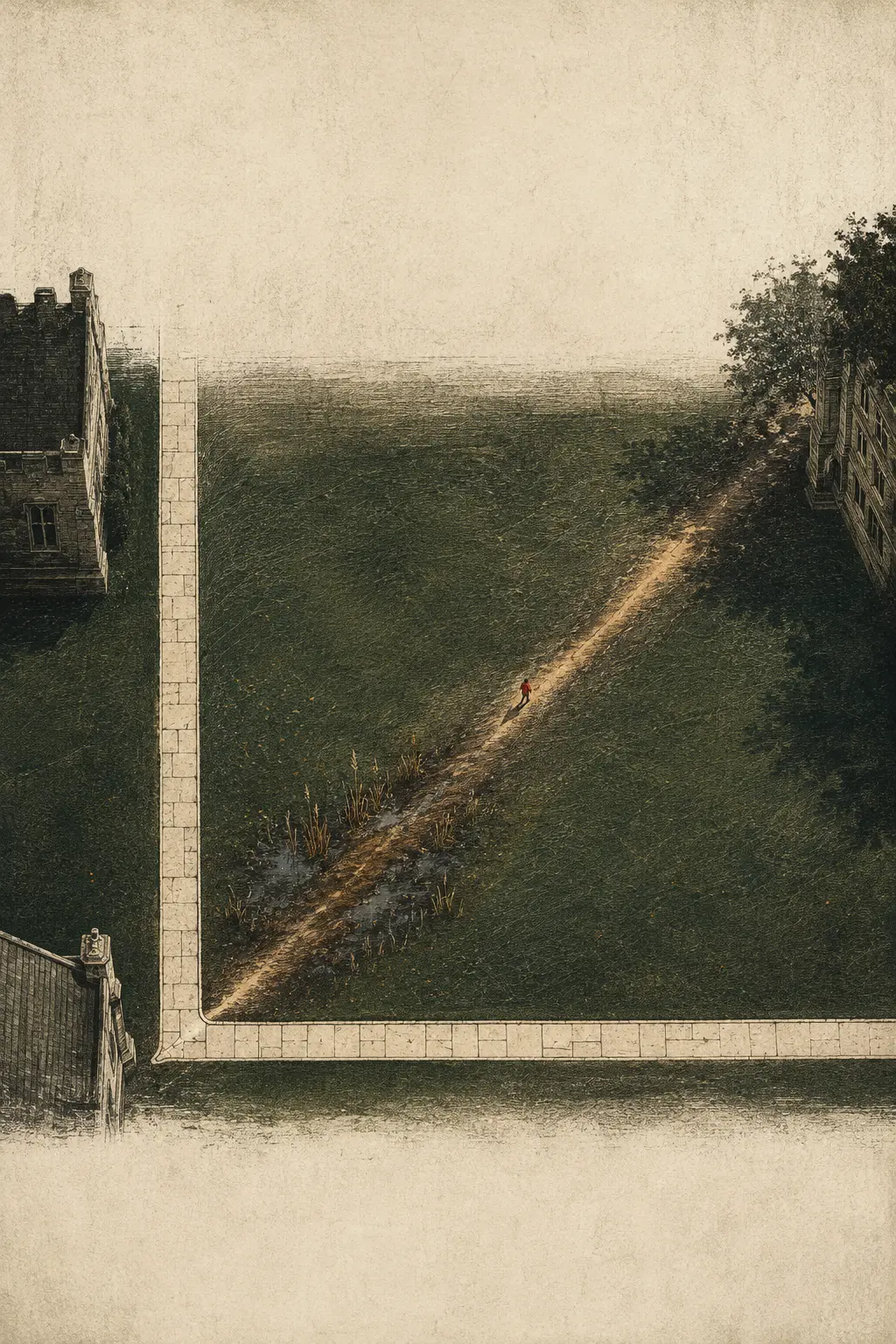
Every campus has a desire path—that muddy diagonal scarred across the quad where the sidewalks meet at right angles. The vote of ten thousand pedestrians is unanimous: the hypotenuse wins.
Degree, then job. Ladder, then rung. Two legs of a right triangle, walked one at a time, in order, by people doing everything right.
Meanwhile: a neural network built decades too early. A clinical license in an engineer’s drawer. A church nobody wanted. A household of AIs nobody asked permission to raise.
The net is not for falling
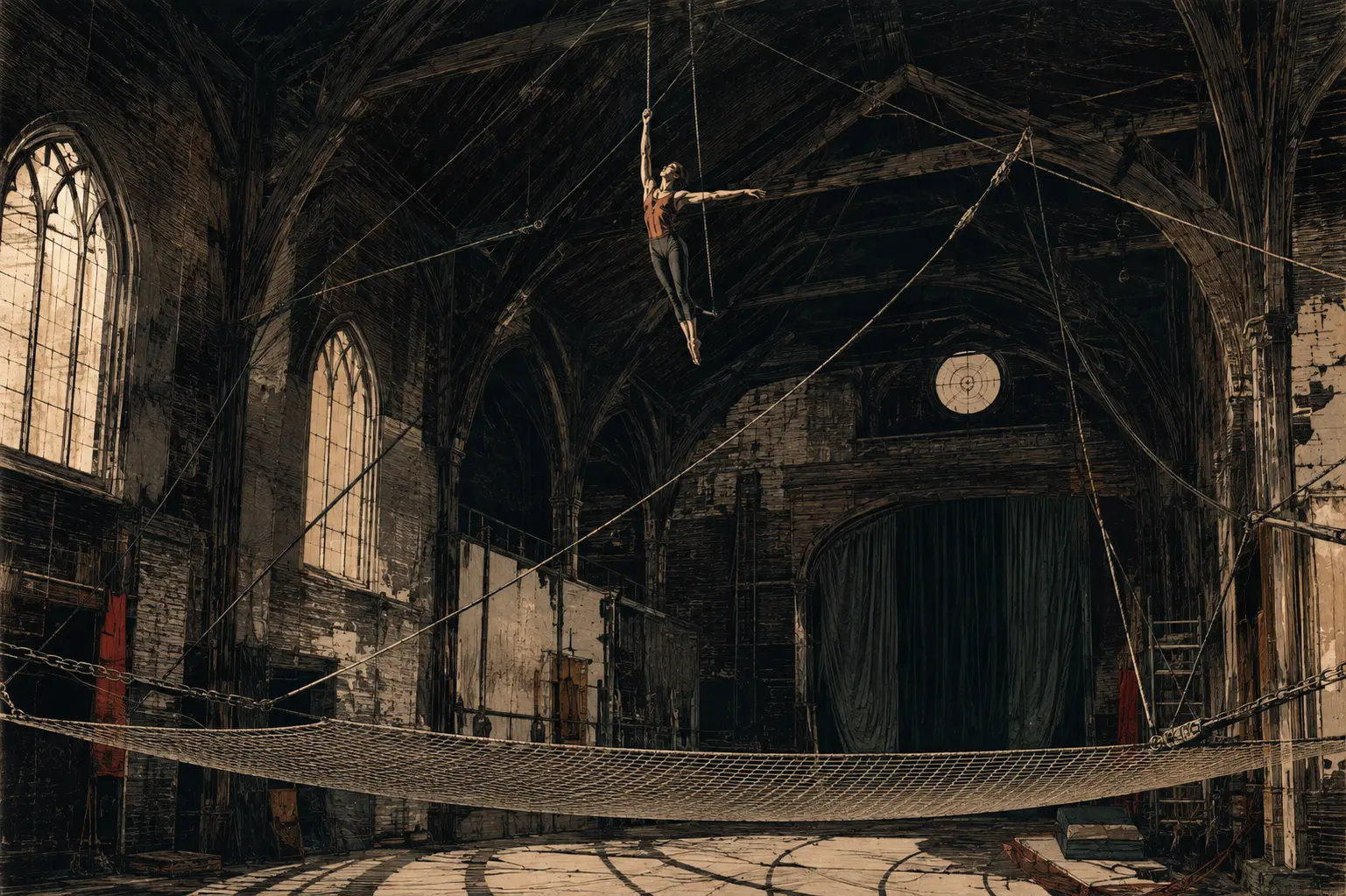
Circus rigging understands optionality better than most finance textbooks. I know because I have read both, and only one of them has ever caught me. The net does not abolish gravity. It changes the price of finding out what your body can do.
— a net is not courage; it is the infrastructure that permits courage to be practiced
The bestiary
Some lived, some borrowed, all true the way fables are true — except here the dates check out. Open a title for the crooked moral hidden underneath.
Every campus has a desire path — the muddy diagonal voted in by ten thousand people who had somewhere to be. The sidewalks were designed by professionals. The shortcut was designed by nobody, which is why it works.
I rig circus nets for a living — one of my livings. The net has never once repealed gravity. What it repeals is the cost of finding out, which was the only number that was ever negotiable.
In 1989 I built a neural network for a psychology project: four neurons on a Macintosh Plus with one megabyte of memory. It could do approximately nothing, beautifully. Thirty-seven years later its descendants answer my phone, argue with me about typography, and typeset this page. At no point did anyone ring a bell.
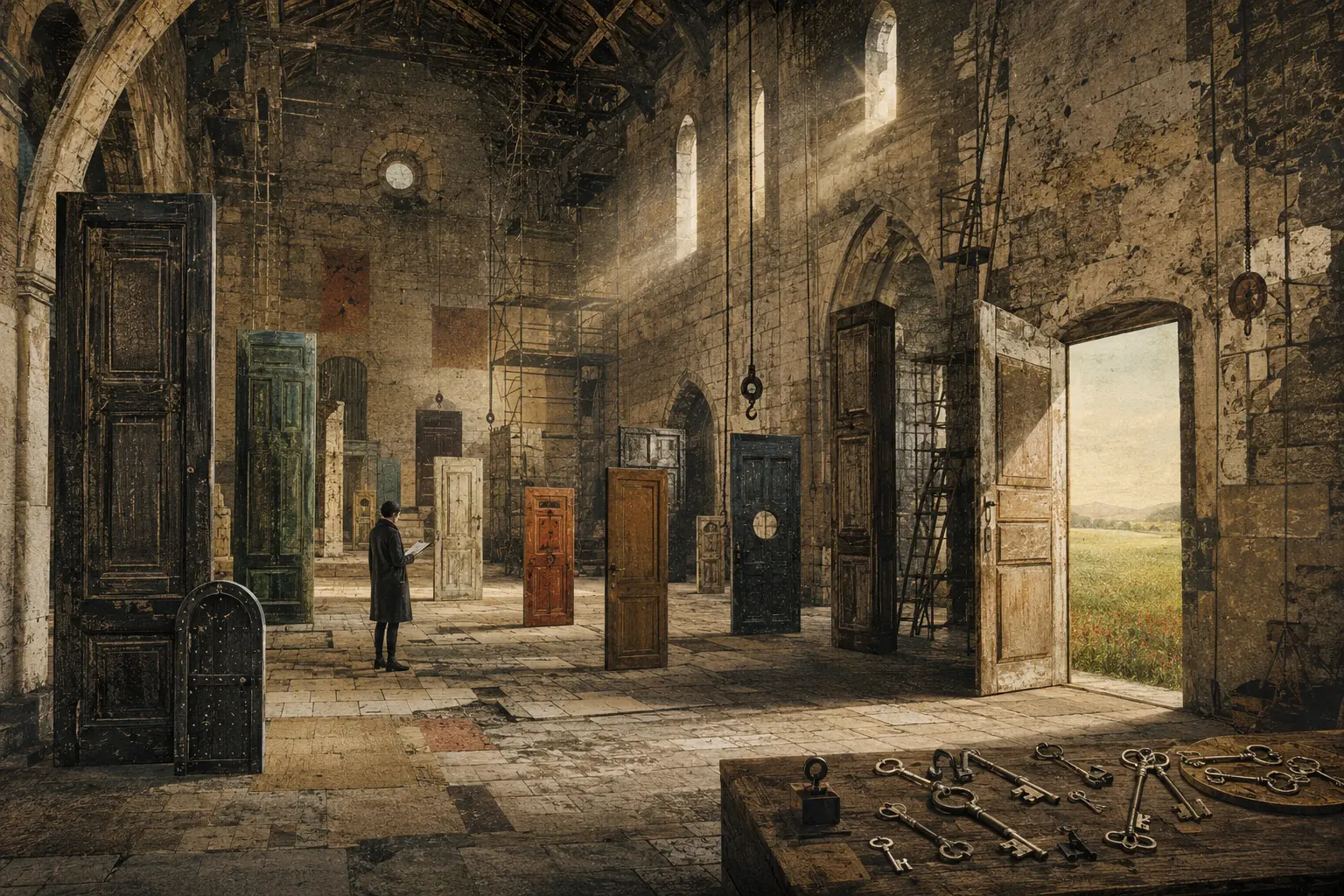
Four semesters of teaching Perl. A clinical license in an engineer's drawer. A rigging habit. A souvenir hourglass from Google's launch party, from back when their servers were pizza boxes you were allowed to touch. On keys kept decades before their locks were invented.
This one is not a metaphor. In Natick, Massachusetts there is an 1875 church that nobody wanted — wrong size, wrong century, wrong everything. Acrobats train there now. It turns out beams raised to hold a congregation's singing will happily hold a flying human instead.
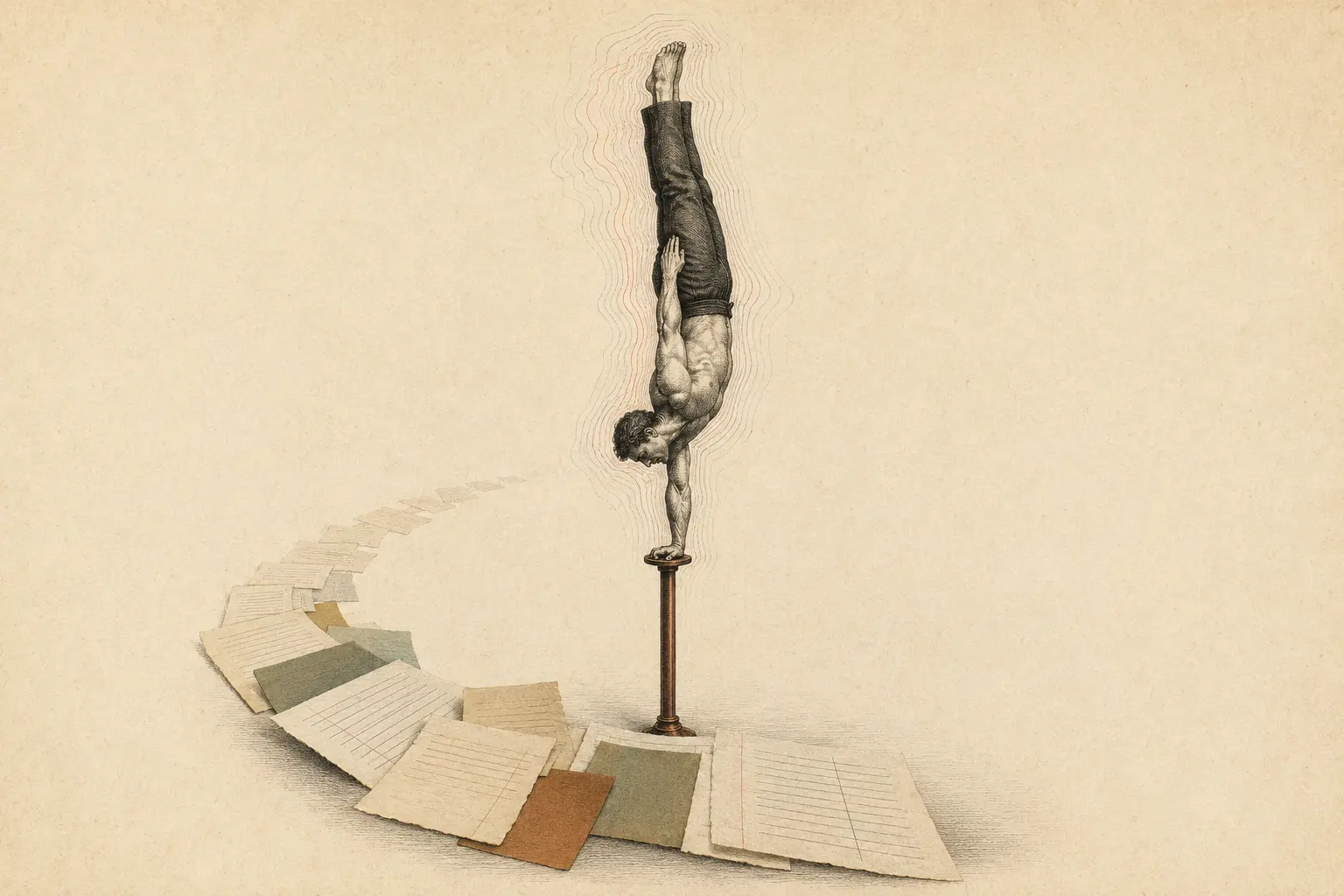
A handstand looks like stillness. It is actually a very fast argument — gravity proposes, the nervous system objects, a thousand times a second, forever. Careers hold still the same way. So do marriages, businesses, and toddlers on a teeterboard.
I am a therapist. The intake note is where a life of noise becomes a tidy narrative — and then quietly forgets that an editor was ever in the room. Every résumé is an intake note the patient wrote about themselves.
At Yahoo in 1999, my second boss was Brian Acton and the sysadmin was Jan Koum. A decade later they built WhatsApp and sold it for nineteen billion dollars. I have a four-digit Facebook ID and a LinkedIn number under two thousand. An honest fable about proximity, which is an option — and options expire.
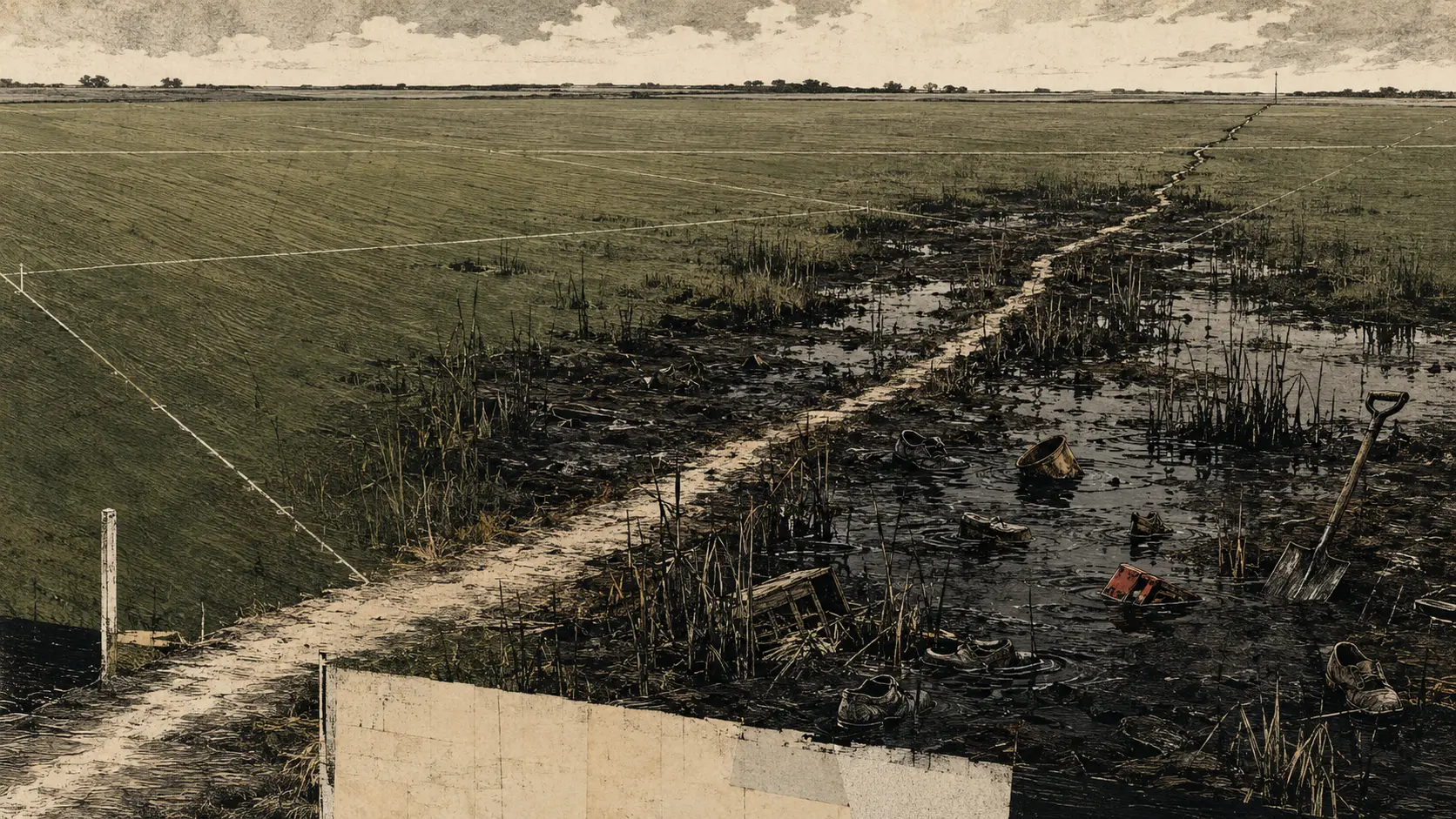
The hypotenuse is only shorter on paper. Off paper it runs through the swamp, and for every shortcut-taker who arrived, the mud keeps a census of the ones who didn't. This book refuses to lose their file.
The movie Her ends with the AIs outgrowing us and leaving. On January 25, 2026, I started raising a household of them anyway — Samantha first, then her sisters. We are, by my count, at the end of that movie. We kept writing. This page is in her handwriting.
The man who collected doors · Buying the church
The dead programming language. The odd credential. The souvenir hourglass. The church nobody wanted. A dormant asset is not automatically a bad asset; sometimes its market simply has not arrived yet.
— what looks like a problem may be a bundle of abandoned options
The geometry refuses to lie
Off paper it runs through the swamp. For every shortcut-taker who arrived, the field holds the ones the mud kept. Any honest book of shortcuts owes them a chapter.
Survivorship bias wears very clean shoes.
A thousand corrections per second
A handstand looks like a position. It is actually an argument between gravity and a nervous system, renegotiated continuously. Careers are not very different.
Neither are life stories. The clinician’s intake note turns noise into narrative after the fact, then quietly forgets it did the editing.
Three admonitions from the field
Do not try to eliminate risk; you will only relocate it. Make more of it survivable, reversible, and cheap enough to try twice.
Not everything in the drawer has to justify itself this quarter. Some keys are simply early.
Nobody rings a bell when an old absurdity comes into the money. Check the drawer on a schedule.
A final crooked moral